
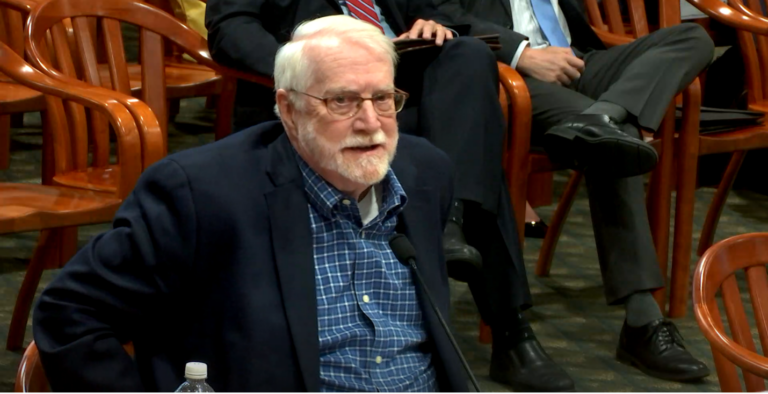
On April 14, Citizens Utility Board (CUB) of Michigan General Counsel and board member John Liskey testified before the Michigan House Committee on Energy about a proposed bill, HB 5710, that would, among other things, eliminate critical funding to efforts to fight against utility rate hikes.
Liskey testified about the 44-year history of the residential ratepayer fund, which was created by the legislature in 1982 after energy affordability became a top concern following the energy crisis of the 1970s. The fund, as Liskey described it, was created as “an attempt to begin to level the playing field between utilities and residential customers.”
Decades later, energy affordability is again one of the chief economic issues facing consumers. In particular, rising electricity rates are leading policymakers to look at ways to address energy costs. But, as Liskey explained at the hearing, cutting funding that supports groups that oppose utility efforts to raise rates would only make the affordability problem worse.
The amount of money in the fund is about $4 million annually, and half of that money goes to the Attorney General’s office, with the other half going to the Utility Consumer Participation Board (UCPB), a governor-appointed board that distributes dollars to groups, including CUB, to finance their participation in rate cases and other cases before the Michigan Public Service Commission (MPSC). HB 5710 would eliminate the half of funding that goes to the UCPB and increases the amount for the AG by $750,000.
Liskey pointed out that the cost to ratepayers for the $4 million amounts to “couch cushion money” – about 50 cents a year or less than a nickel a month.
What do ratepayers get in return? There’s no one source counting up all the savings that have been won in cases over the years. The UCPB publishes annual reports in which the groups that receive funding estimate the savings to ratepayers stemming from their intervention, and the amount saved is typically in the hundreds of millions of dollars.
The groups funded by the UCPB win those savings by participating in cases and making arguments the MPSC can use to justify approving lower rate increases. Liskey cited one recent example of one case out of the many that CUB is involved in every year. Consumers Energy recently concluded an electric rate case in which it had asked for a $436 million rate increase, but the MPSC only approved $276 million, in part due to the arguments put forth by intervening groups funded by the UCPB. With support from the UCPB, the groups are able to file expert witness testimony that makes arguments that go into the record that the MPSC can cite to justify a lower rate increase.
Bill supporters may argue that the UCPB is unnecessary because the bill would increase funding for the AG to fight against rate hikes. But that argument ignores the complexity of utility rate cases which are thousands of pages long. There are always several cases going on at the same time. It’s of enormous help to have several parties participating in the cases working and coordinating with each other as the law requires. Allowing nonprofit groups to intervene in cases is the most efficient approach.