
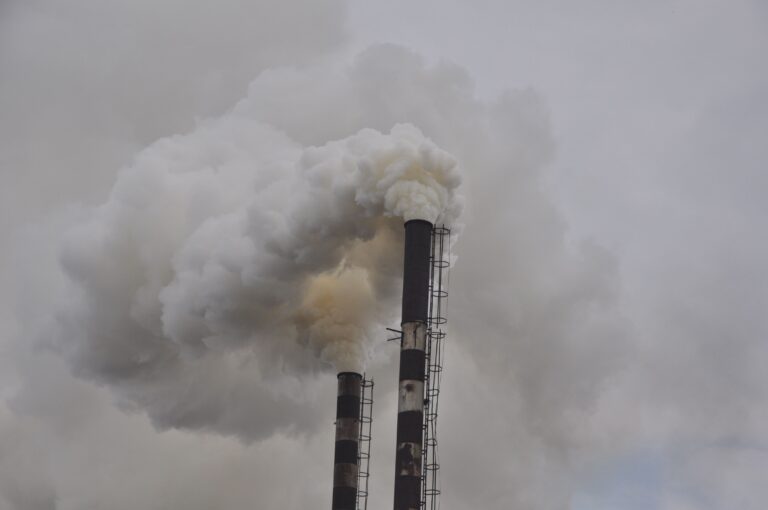
A September 11 ruling by the U.S. Court of Appeals for the District of Columbia Circuit marks a significant victory for Michigan energy consumers, emphasizing the authority of states in planning for energy resource adequacy. In a unanimous opinion, a three-judge panel vacated the Department of Energy’s (DOE) May 25th emergency order that had forced Consumers Energy to keep the aging J.H. Campbell Generating Plant, a coal-fired facility located in Ottawa County, operating past its planned retirement date.
The Campbell plant was originally slated to shut down as part of a comprehensive, long-term plan by Consumers Energy detailed in formal proceedings before the Michigan Public Service Commission (MPSC). This transition plan had been thoroughly vetted and approved by state regulators and the Midcontinent Independent System Operator (MISO). It was also reviewed extensively by third-party energy advocates, including experts working on behalf of the Citizens Utility Board of Michigan (CUB).
Despite this state and regional planning, the DOE invoked Section 202(c) of the Federal Power Act in May 2025, issuing an emergency order to keep the plant open due to alleged grid reliability concerns.
The core of the legal dispute centered on the statutory interpretation of Section 202(c) and the traditional boundaries between federal and state jurisdiction. The Federal Power Act explicitly preserves the primacy of states in regulating in-state power plants for the economic and environmental benefit of their constituents. The D.C. Circuit’s opinion forcefully reaffirmed this demarcation, noting that “Section 202(c) gives DOE limited authority to sidestep states’ jurisdiction… to briefly compel generation or interconnection in times of war or other ‘emergency’ situations.”
The court found that the DOE’s use of its emergency authority in this context was a significant overreach. Rather than addressing a sudden, short-term crisis, the DOE attempted to substitute its own long-term reliability planning for that of the state of Michigan. The court warned that accepting the DOE’s expansive reading of the statute would permit the federal government to arbitrarily pick its preferred generation sources in any state, disregarding local regulation and long-term resource adequacy planning. This reasoning aligns with the arguments CUB presented in an amicus brief filed with other Midwest consumer advocates, which emphasized the public’s right to participate in energy planning and regulatory processes.
Consumers Energy has stated it will continue to operate the plant under a subsequent DOE order through November 14. Because each Section 202(c) order expires after a 90-day period, the DOE has issued them on a rolling basis to keep the plant running indefinitely. However, CUB will argue that the court’s Sept. 11 ruling should invalidate all subsequent Section 202(c) orders concerning the Campbell plant.
As CUB and fellow consumer advocates pointed out, the DOE’s actions had clear negative impacts on ratepayers. As we highlighted in our amicus brief, forcing the continued operation of an uneconomical coal plant has exacerbated an ongoing affordability crisis for electric customers. According to Consumers Energy, complying with the federal orders had a financial impact of $259 million in utility costs from the time the first federal order was issued in May 2025 to the end of June 2026. The utility is seeking to recover those costs from customers across the north and central MISO regions.
Consumers Energy’s requests to recover and allocate Campbell’s operating costs remain subject to separate proceedings. CUB will continue advocating to protect residential customers from unjustified costs. Based on the Sept. 11 court ruling, regulators may have grounds to disallow the recovery of future costs associated with subsequent orders.
Ultimately, the D.C. Circuit’s ruling affirms the principle that states bear the primary responsibility to plan for and avert reliability risks. By vacating the DOE’s order, the court has supported Michigan in retaining its right to shape its own energy future while balancing affordability, environmental goals, and grid reliability.
(image: https://pexels.com, Sandeep Kumar Sharma)