
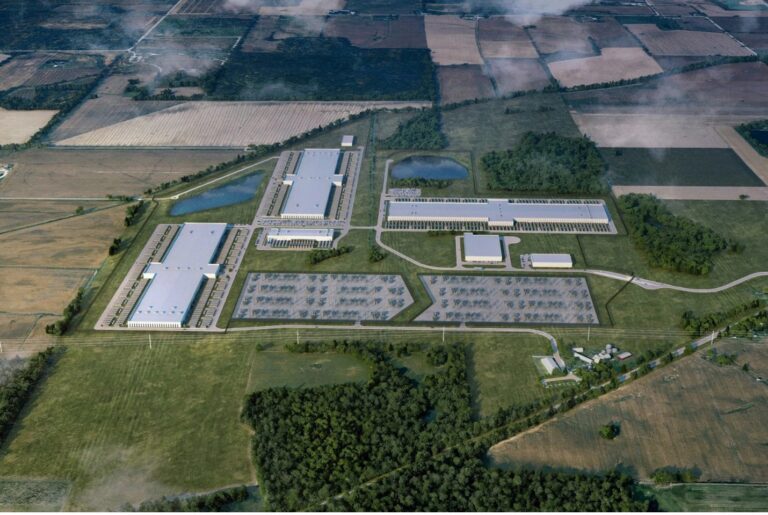
The Michigan Public Service Commission (MPSC) has disappointed consumer advocates with a precedent-setting data center decision that sidesteps transparency and closes the door on public input.
On October 31, DTE filed an ex parte application for approval of two special contracts to service a new hyperscale data center in Saline Township. In other words, DTE formally asked the MPSC to quickly approve their plan to provide 1.4 gigawatts of electricity for the new facility—enough to power more than one million homes— without an opportunity for public intervention.
The Citizens Utility Board of Michigan (CUB) joined several other organizations in filing a petition to intervene. Approval of this petition by the MPSC would have created a proceeding more similar to a rate case, where third parties could have reviewed in-depth details of the proposed agreement and filed expert testimony to dispute the utility’s claims. These processes, known as contested cases, are an important part of Michigan’s consumer protections framework. A contested case in this matter was also formally requested by Michigan Attorney General Dana Nessel and supported in a letter signed by 23 state lawmakers.
While DTE argued that a contested case was not necessary because the agreement to power the new data center will not increase rates for existing customers, CUB experts remain unconvinced. Because the special contracts were only made public in a highly redacted form, we were left in the dark with regard to many specifics of the agreement. It is impossible to fully verify DTE’s claims that new costs won’t be spread to residential ratepayers, and we are left with a lot of questions. Some of these are related to the proposed cost shifting and the planned source of the massive 1.4 gigawatts of electricity the data center will require. In comments filed by CUB Assistant Director Chris Trubac on the docket, U-21990, we pointed out that “if an increase in demand requires older, less efficient power plants to run more often, system generation costs paid by residential customers could be increased.”
Unfortunately, the commission did not heed our warnings. On December 18, the MPSC voted to approve DTE’s request, granting ex parte approval of the agreement as long as certain conditions are met. This means the project can go forward with no opportunity for advocates to request changes to the special contracts.
Among the conditions imposed by the MPSC was a requirement that DTE track the costs of serving the data center and ensure those costs are paid exclusively by the data center owner. This condition appears intended to address a concern expressed by CUB and other advocates that residential customers could be forced to subsidize the data center’s costs.
Other conditions of the ex parte approval include the following:
- DTE must file an amended renewable energy plan with its next integrated resource plan and clean energy plan comparing resource requirements needed to comply with renewable energy standards with and without the new data center’s load. They must also analyze options for recovering any incremental renewable compliance costs, ensuring surcharges are not collected on a per-meter basis and are distributed equitably.
- DTE must provide an analysis in the next energy waste reduction (EWR) plan of the incremental costs needed to meet the EWR savings target with the addition of this new data center, and an analysis of how updated surcharges will ensure existing customers are not affected by that incremental cost.
- DTE must update its emergency procedures within 90 days so that the data center’s load is cut off before other customers in the event of a grid emergency, i.e. an energy shortfall.
- DTE must file a proposed tariff for similar large load customers within 90 days.
- In its next electric rate case, DTE must propose a cost allocation and rate design study to ensure future large load interconnection customers pay the full costs of interconnection. DTE must also include an administrative fee for future large load interconnection studies, preventing the cost of the studies from falling on existing customers.
DTE will have to accept these conditions by January 17, 2026 in order to move forward.
While we appreciate the MPSC showing some concern for existing ratepayers, we are not convinced that the conditions commissioners seek to impose will be sufficient. Without an opportunity to analyze the language and weigh in, we cannot guarantee the data center owner will take responsibility for its own costs. We remain disappointed by the lack of opportunity to thoroughly examine this agreement and advocate for guaranteed ratepayer protections.
We have serious concerns about the impact this ruling will have on future utility agreements with large load data center customers, including those with municipal and co-op energy providers. Unregulated utilities frequently take cues from state regulatory rulings, and the MPSC has effectively signaled that a hands-off approach is an acceptable way to proceed in finalizing these agreements.
As the data center boom appears poised to continue, we remain highly skeptical that utilities will be able to fully shield Michigan households from new costs. That concern is especially pronounced if the agreements continue to be approved with little to no public input.